


TL;DR: The "This Site Can’t Be Reached" error appears when your browser cannot establish a connection to the server. The most reliable first steps are flushing your DNS cache and resetting TCP/IP. If the site is down for everyone, not just you, the fix lives on the server: check whether your web server process is running and whether a firewall is blocking port 80 or 443.
Contents
- Understanding the Error: What "This Site Can’t Be Reached" Actually Means
- Is the Site Down for Everyone, or Just You?
- Fix 1: Flush Your DNS Cache (Windows, macOS, Linux)
- Fix 2: Reset TCP/IP and Winsock
- Fix 3: Disable or Reconfigure Your Proxy Settings
- Fix 4: Check Your Firewall and Security Software
- Fix 5: Try a Different DNS Server (Google 8.8.8.8 or Cloudflare 1.1.1.1)
- Fix 6: Clear Your Browser Cache and Cookies
- Fix 7: Check Your Internet Connection
- Fix 8: Restart Your Router
- Fix 9: Restart Your Computer
- For WordPress Site Owners: Server-Side Causes and Fixes
- When Nothing Works: Contact Your Host
- Related Articles
Understanding the Error: What "This Site Can’t Be Reached" Actually Means
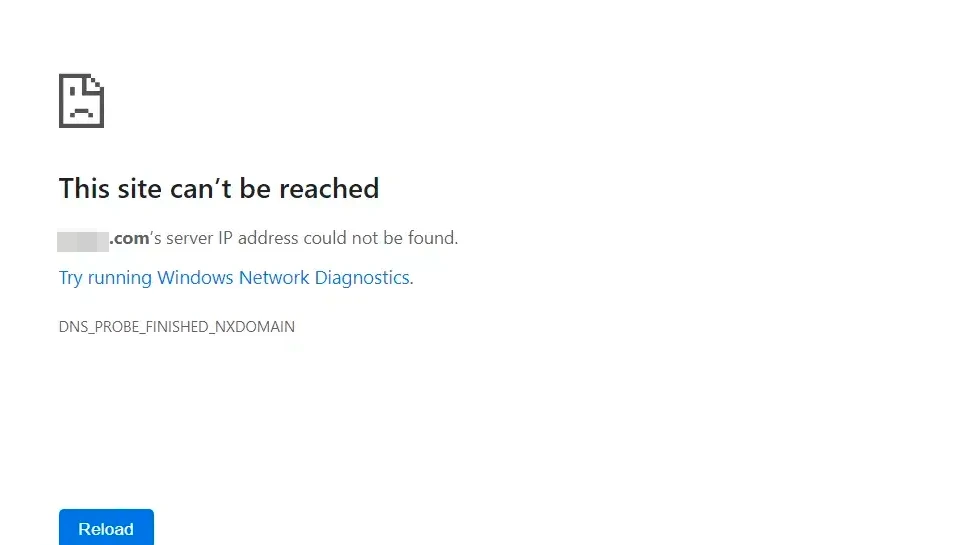
When your browser displays "This site can’t be reached," it failed to connect to the server at the address you requested. The error can originate at different layers of the network, which is why a single fix does not work for every case. Before applying any fix, read the error code underneath the main heading. Common codes include ERR_NAME_NOT_RESOLVED (DNS lookup failed), ERR_CONNECTION_REFUSED (server actively rejected the connection), and ERR_CONNECTION_TIMED_OUT (server did not respond). Each code points to a different fix.
Two broad root causes cover the majority of cases.
DNS Failures
The Domain Name System (DNS) translates domain names into the IP addresses your device needs to route traffic. When that lookup fails because of a stale local cache, a misconfigured DNS server, or a delay after a domain change, the browser returns this error immediately.
Connectivity and Configuration Problems
A blocked or broken connection at any point between your device and the server produces the same result. Sources include a dropped internet connection, a proxy configured to route through an unavailable address, and a firewall rule blocking outbound traffic on port 80 or 443.
Is the Site Down for Everyone, or Just You?
Before running any local fix, confirm where the problem is. Search for "is [site name] down" or visit a site-status checker and enter the URL.
| Result | What it means | Where to focus |
|---|---|---|
| Down for everyone | Server or DNS issue on the origin | Contact your host or wait; fixes 1 through 9 will not help you |
| Only affects your device | Local network, browser, or OS configuration | Work through fixes 1 through 9 below |
If the site is down globally, local fixes are wasted effort. If only your device is affected, start with Fix 1.
Fix 1: Flush Your DNS Cache (Windows, macOS, Linux)
Your operating system caches DNS lookups to speed up browsing. A stale or corrupted entry causes repeated failures for a site that is otherwise reachable. Flushing the cache forces a fresh lookup.
Windows:
Open Command Prompt and run:
ipconfig /flushdnsYou should see "Successfully flushed the DNS Resolver Cache."
macOS:
Open Terminal and run:
sudo dscacheutil -flushcache; sudo killall -HUP mDNSResponderNo visible output is expected; the cache is cleared silently.
Linux (systemd-based distributions):
sudo systemd-resolve --flush-cachesAfter flushing, reload the page. If the error clears, the root cause was a stale DNS record.
Fix 2: Reset TCP/IP and Winsock
Resetting TCP/IP and Winsock clears the Windows network stack and removes corrupted protocol state. Use this fix when the DNS flush did not help and the problem is specific to one device.
You need administrator privileges to run these commands.
Open Command Prompt as Administrator:
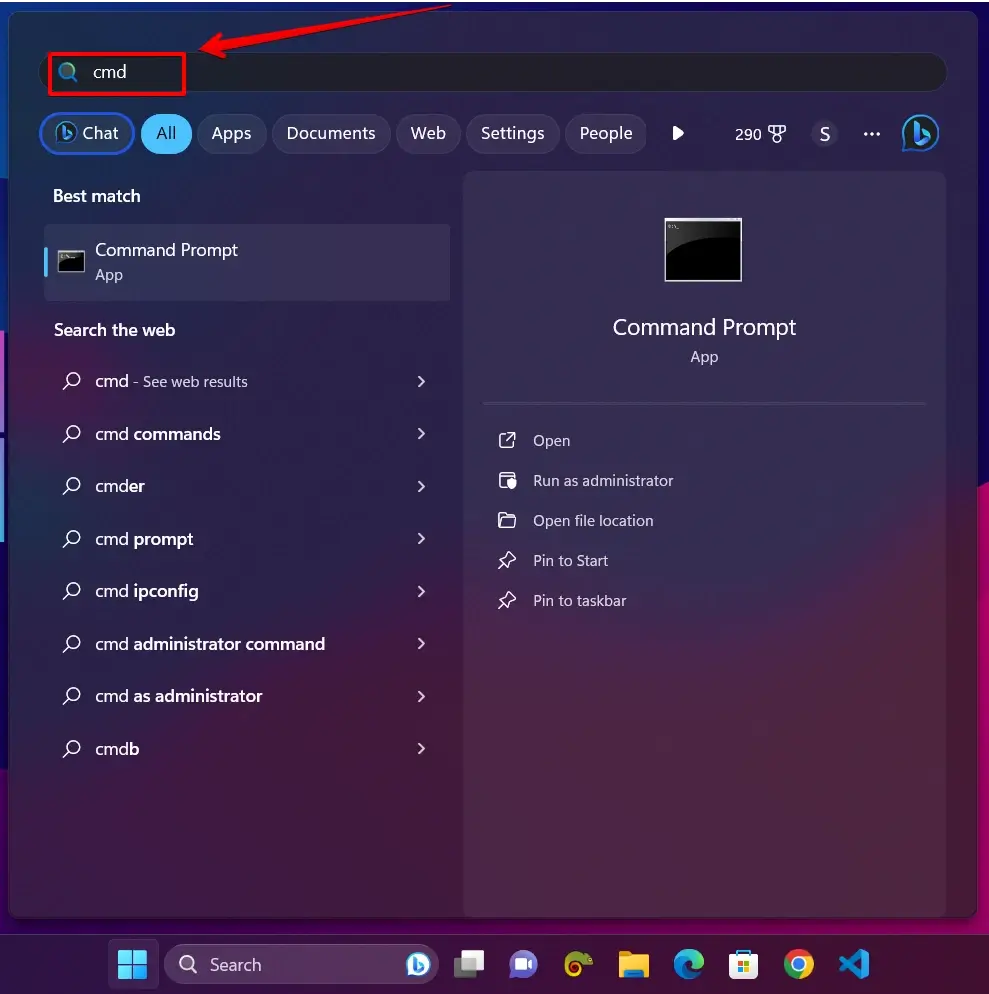
- Press the Windows Start button and type "cmd" into the search bar.
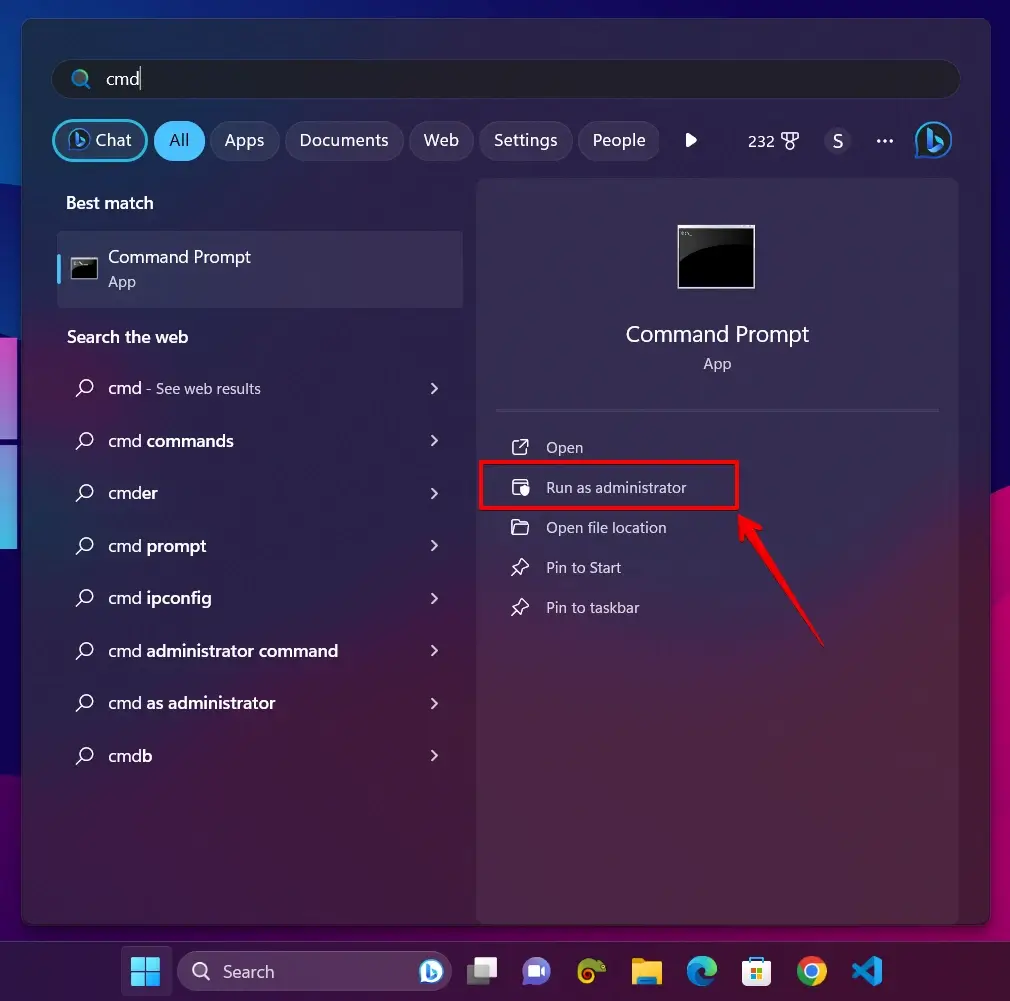
- Right-click "Command Prompt" in the results and select "Run as administrator."
Run the reset commands (press Enter after each):
netsh winsock reset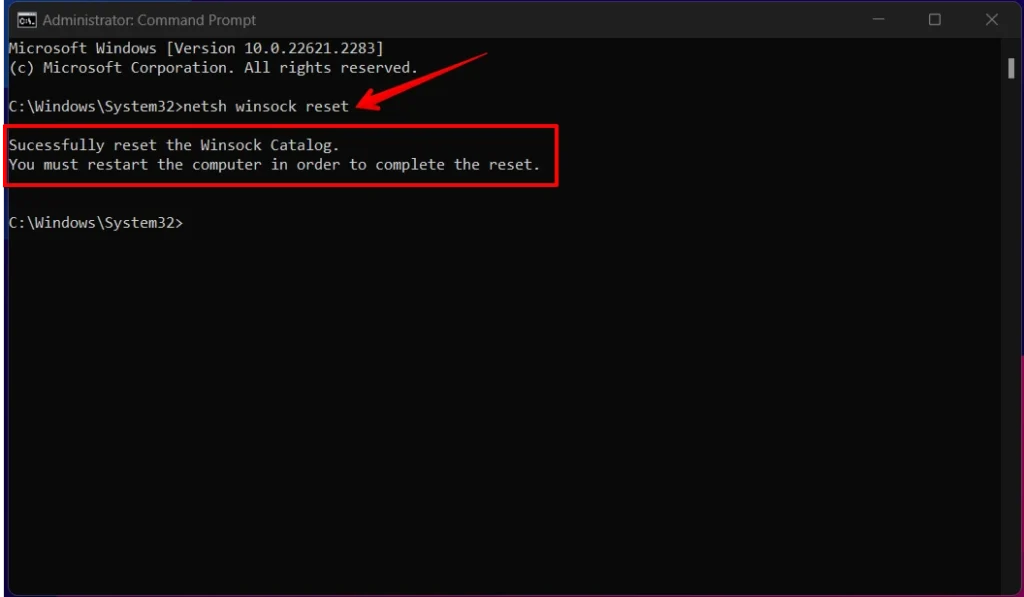
netsh int ip reset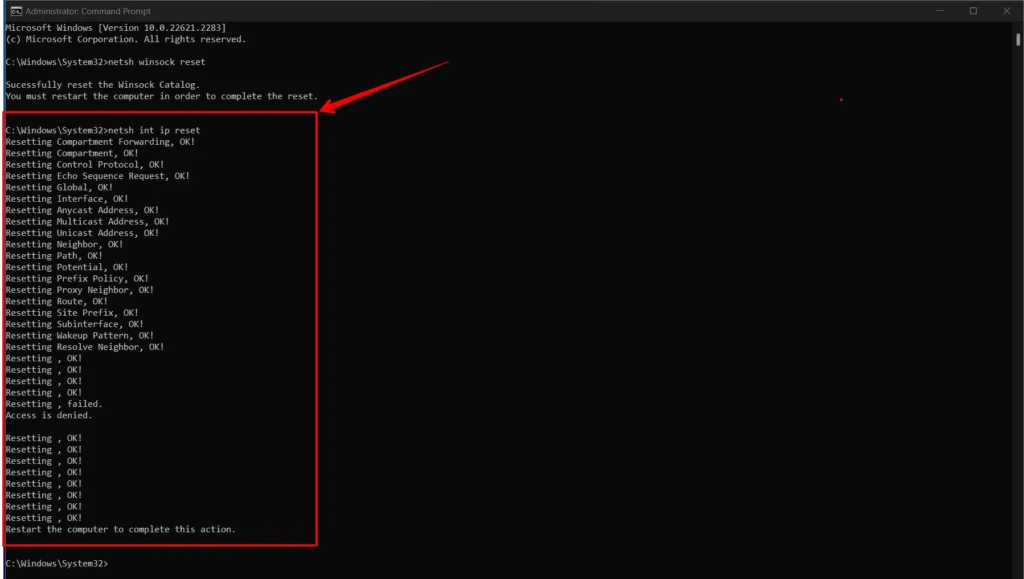
Restart your computer to apply the changes, then test whether the site loads.
For the full technical reference on these commands, see Microsoft’s TCP/IP reset documentation .
Fix 3: Disable or Reconfigure Your Proxy Settings
A proxy configured incorrectly, or pointing to an address that is no longer reachable, blocks all traffic and triggers the "This site can’t be reached" error for every site.
On Windows:
- Open "Settings" and search for "Proxy settings."
- Under "Manual proxy setup," check whether a proxy address is entered.
- If you are not on a corporate network that requires a proxy, toggle off "Use a proxy server."
On macOS:
- Open "System Settings" and go to "Network."
- Select your active network connection and open "Details."
- Click the "Proxies" tab and disable any listed proxies.
In Chrome:
Chrome uses the operating system’s proxy settings by default. Changing the system settings above applies to Chrome automatically.
After disabling the proxy, reload the page.
Fix 4: Check Your Firewall and Security Software
A firewall or antivirus program can block outbound connections. Test this by temporarily disabling the software, verifying whether the site loads, and re-enabling protection immediately.
Windows Firewall:
- Open "Settings," select "Privacy & Security," then "Windows Security."
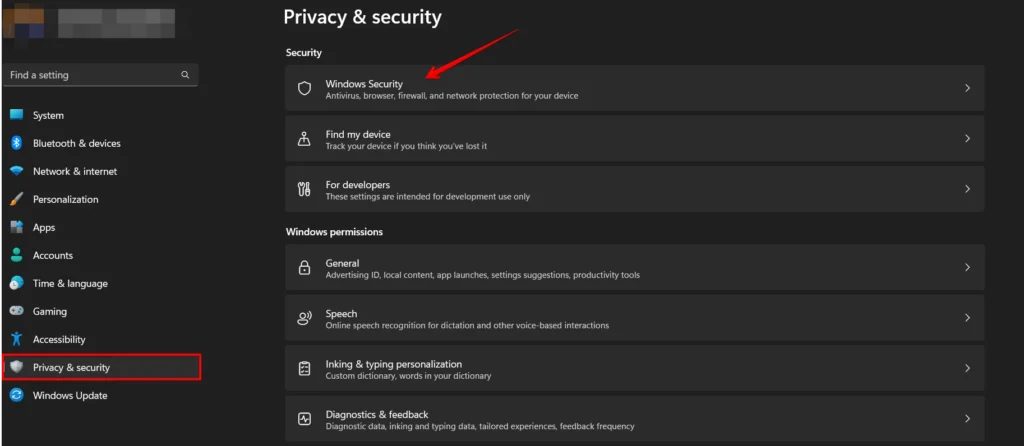
- Click "Firewall & network protection."
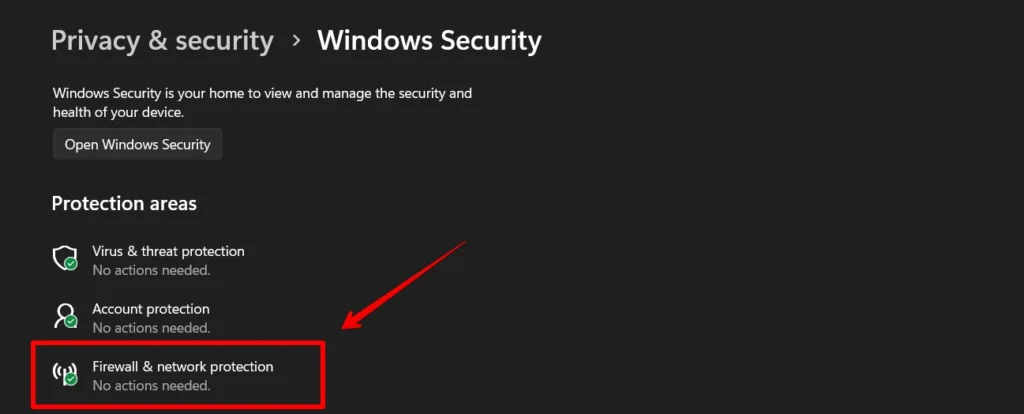
- Select the active network profile (Public or Private).
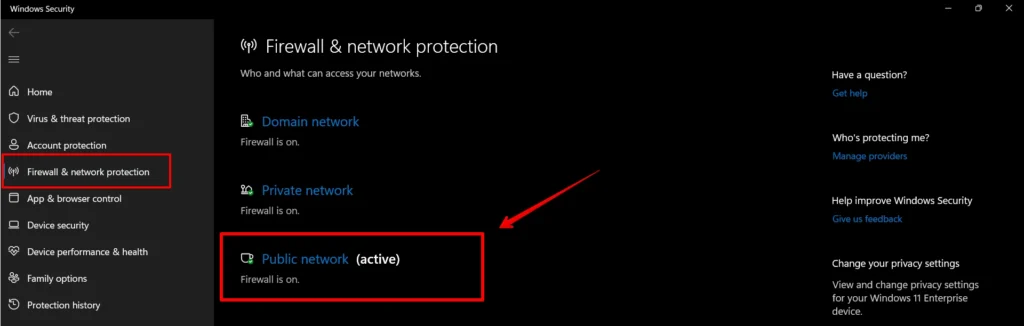
- Toggle the switch to turn off the firewall for that network.
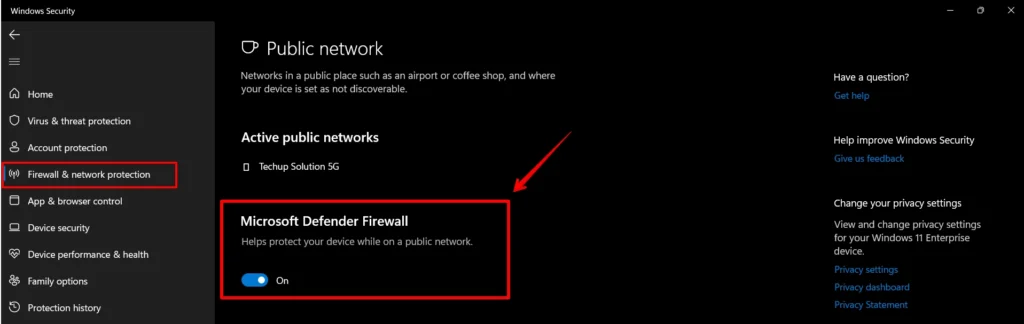
Test whether the site loads. Re-enable the firewall immediately after the test.
Antivirus Software:
Find the antivirus icon in the system tray (bottom-right of the taskbar). Right-click and look for an option to disable protection temporarily. Select the shortest available time interval.
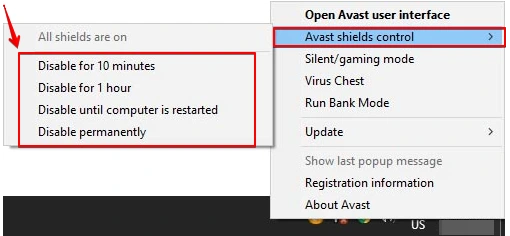
Check the site, then re-enable the antivirus.
If disabling either the firewall or antivirus resolves the error, add the site to the software’s exception list rather than leaving protection disabled.
Fix 5: Try a Different DNS Server (Google 8.8.8.8 or Cloudflare 1.1.1.1)
Your ISP’s default DNS server may be slow, rate-limiting requests, or temporarily down. Switching to a public DNS server is a quick test that costs nothing to reverse. Cloudflare provides setup instructions for all major operating systems at 1.1.1.1 .
Google Public DNS: 8.8.8.8
Cloudflare DNS: 1.1.1.1
On Windows:
- Open "Control Panel" and go to "Network and Sharing Center."
- Click your active connection, then "Properties."
- Select "Internet Protocol Version 4 (TCP/IPv4)" and click "Properties."
- Choose "Use the following DNS server addresses" and enter 8.8.8.8 as the preferred server.
On macOS:
- Open "System Settings," then "Network."
- Select your connection, open "Details," then the "DNS" tab.
- Remove existing entries and add 8.8.8.8.
After saving, flush your DNS cache (Fix 1) to ensure the new server is used immediately.
Fix 6: Clear Your Browser Cache and Cookies
Corrupted or outdated cached data can cause a browser to fail loading a page that it previously cached in a broken state. Clearing the cache and cookies forces a clean request to the server.
- Open your browser’s settings menu.
- Navigate to "Privacy and security" or the browsing history section.
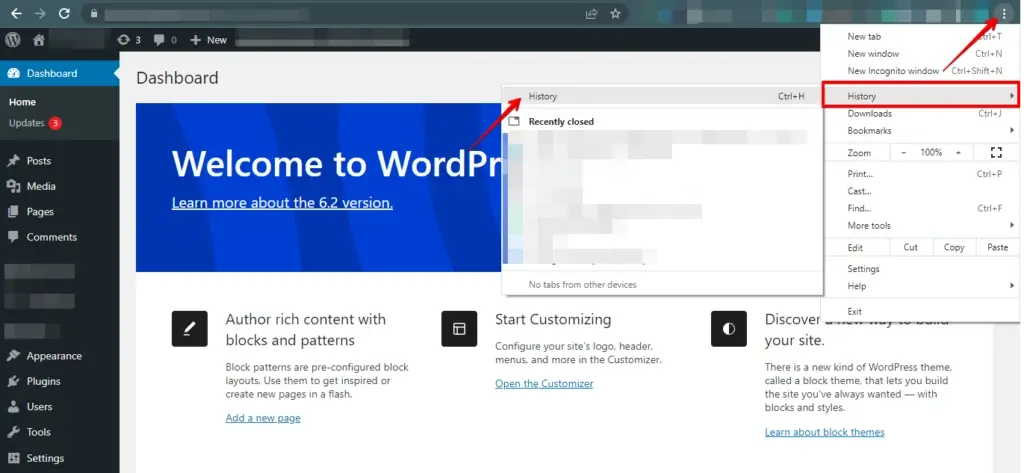
- Open "Clear browsing data."
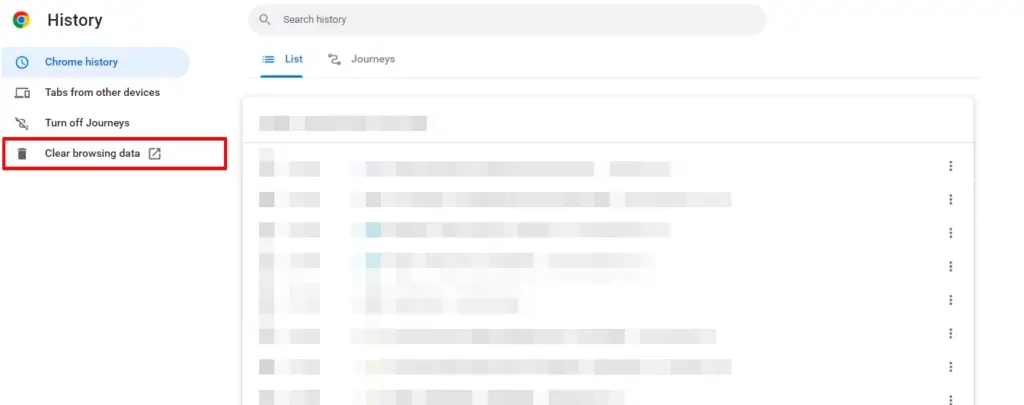
- Select the time range, check "Cached images and files" and "Cookies and other site data," then click "Clear data."
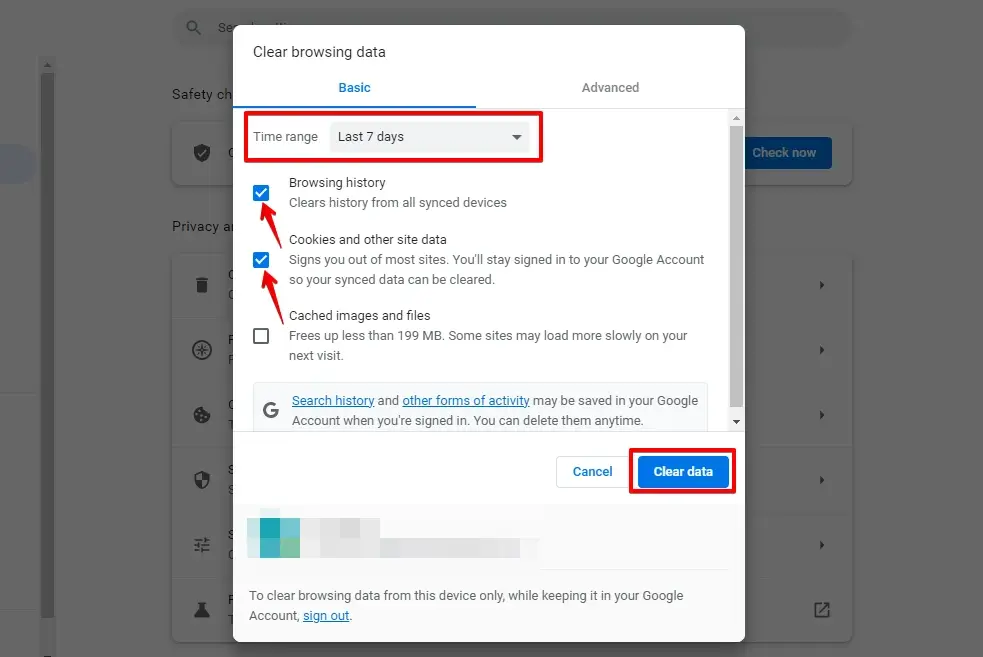
Reload the page after clearing. For additional guidance on clearing browser data in Chrome, see Google’s Chrome support page .
Fix 7: Check Your Internet Connection
Confirm that your device has a working internet connection before debugging further. Open a second site you know is live. If that also fails, the issue is your connection, not the specific site.
If your connection is down, unplug your router from power, wait at least one minute, and plug it back in. This clears the router’s internal state and re-establishes a clean connection with your ISP.
Fix 8: Restart Your Router
A router that has been running for weeks can accumulate connection state that causes erratic behavior. A clean power cycle often resolves intermittent connectivity problems.
- Locate the router’s power cord and unplug it from the wall.
- Wait 10 to 15 seconds for the router light to go off.
- Plug the cord back in and allow a few minutes for the router to fully restart.
After the reboot, test the site again.
Fix 9: Restart Your Computer
Restarting the computer resets TCP/IP state, clears memory-resident network caches, and reloads network drivers. If you have not restarted recently and fixes 1 through 8 have not helped, a restart takes a few minutes and eliminates several categories of transient issues.
For WordPress Site Owners: Server-Side Causes and Fixes
"This site can’t be reached" can originate on the server, not the visitor’s device. When a site is confirmed down for everyone, the cause is usually one of the following.
Web server not running. Check whether Apache or Nginx is active. On most Linux hosts:
sudo systemctl status apache2
sudo systemctl status nginx
A stopped service returns this error for every visitor. Restart the service and confirm the site loads.
Firewall blocking ports 80 and 443. A server-side firewall that drops inbound HTTP or HTTPS traffic produces this error for all visitors. Verify port rules in your hosting control panel or with iptables -L.
Wrong SITEURL or HOME constant after a migration. From WP STAGING support tickets, the most common server-side cause of this error after a push-to-live is a misconfigured SITEURL or HOME constant in wp-config.php that still points at the staging domain. Open wp-config.php and confirm both constants match the live domain.
If you used WP Staging Pro to push your staging site to production and the site became unreachable, use the WP STAGING backup snapshot taken before the push to restore the prior state. See How to Backup and Restore Your WordPress Website for step-by-step recovery instructions.
DNS propagation after a domain transfer or migration. After moving a site to a new host, DNS changes take time to propagate globally. During this window, some visitors reach the old server and see "This site can’t be reached." Wait for propagation to complete, which can take up to 48 hours.
When Nothing Works: Contact Your Host
If all client-side fixes fail and the site is down for everyone, the root cause is on the server. Contact your hosting support team and provide:
- The full error text from the browser, including the specific error code (ERR_NAME_NOT_RESOLVED, ERR_CONNECTION_REFUSED, or similar)
- A screenshot of the error page
- The approximate time the error first appeared
Most managed WordPress hosts can identify the cause from server logs within a short time.
Related Articles
