


Choosing the right WordPress eCommerce plugin sets the foundation for how fast you can launch, how much you pay for extensions, and how well your store scales.
At a Glance: Quick Comparison
| Plugin | Best for | Starting price | Free tier |
|---|---|---|---|
| WooCommerce | Physical + digital products, full storefront | Free (core) | Yes |
| Easy Digital Downloads | Digital files only (eBooks, software, audio) | Free (core) | Yes |
| MemberPress | Subscriptions and membership sites | $179.50/year | No |
| BigCommerce | High-volume, multi-channel selling | $29/month | 15-day trial |
| WP Simple Pay | Simple Stripe payment forms without a cart | $34/year | Yes (lite, 3% fee) |
Contents
Key Considerations When Choosing a WordPress eCommerce Plugin
Before picking a plugin, weigh these criteria:
- Compatibility: Make sure the plugin works with your current WordPress version and with any other plugins already installed.
- Features: Look for inventory management, payment gateway options, and the store-customization tools your setup needs.
- Ease of use: A complicated setup delays launch. Prioritize clear onboarding and good documentation.
- Performance: A heavy plugin adds page weight. Test on a staging site before deploying to production.
- Security: Check for regular releases, PCI compliance for payment handling, and a clear vulnerability-disclosure process.
- Support: Determine whether free support is forum-only or includes direct ticket access.
- Scalability: Confirm the plugin can handle your expected product count and order volume as you grow.
- Cost: Factor in the core plugin price and the extensions you will actually need, not just the headline figure.
Which Plugin Is Right for You?
| I want to… | Best pick |
|---|---|
| Sell physical and digital products in a full storefront | WooCommerce |
| Sell only digital files (eBooks, software, audio) | Easy Digital Downloads |
| Run a membership site with subscription billing and content gating | MemberPress |
| Scale to high order volumes without per-transaction fees | BigCommerce |
| Collect Stripe payments without building a full product catalog | WP Simple Pay |
| Avoid WooCommerce ecosystem dependency | BigCommerce or WP Simple Pay |
Top 5 WordPress E-commerce Plugins
- WooCommerce
- Easy Digital Downloads
- MemberPress
- BigCommerce
- WP Simple Pay
1. WooCommerce
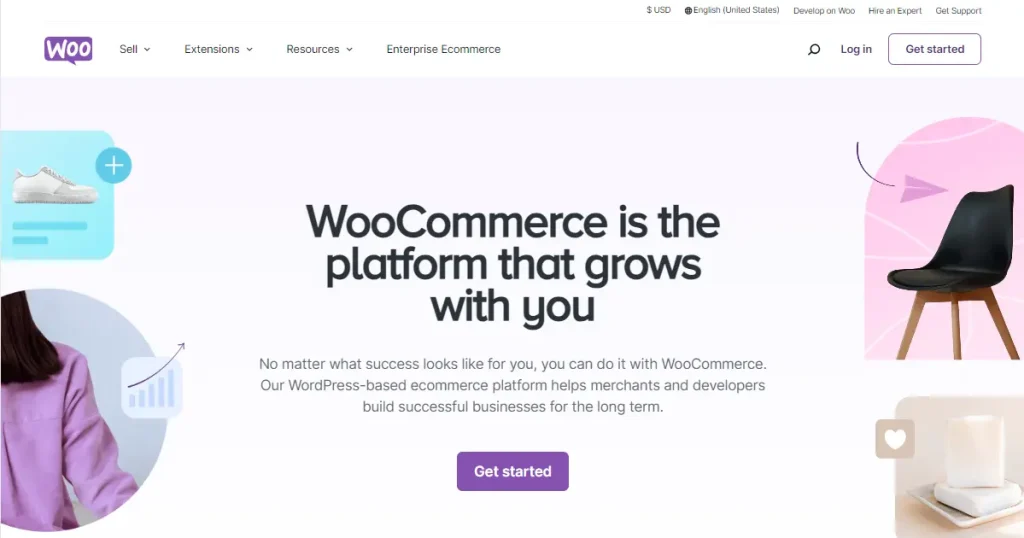
WooCommerce is the most widely installed WordPress eCommerce plugin. Its setup wizard covers the basics quickly: product types, payment gateways, shipping zones, and tax settings. The core plugin is free and handles both physical and digital products out of the box, with bank transfers, cheque, cash on delivery, Stripe, and PayPal supported by default.
The extension ecosystem is deep but can overwhelm users who only need a small catalog with one payment method. Pick your extensions before launch and disable anything you do not need to keep the plugin footprint manageable.
One note for teams that develop on a staging site: WooCommerce stores carry a large data footprint, including orders, customer addresses, and session data. When pushing from staging to production, you need to exclude the live order tables so you do not overwrite real orders with test data. WP STAGING’s push wizard includes table-exclusion controls for exactly this workflow.
Pros
- Handles physical and digital products out of the box.
- Built-in inventory management and order tracking.
- Large extension ecosystem covering most payment gateways, shipping carriers, and marketing tools.
- Supports multiple currencies and languages by default.
- Active community forums and documentation.
Cons
- The extension catalog can overwhelm new users.
- Direct ticket support requires a paid Woo Express plan.
- Works only with WordPress; no standalone deployment.
Pricing
The core plugin is free. Paid themes and extensions vary from a few dollars to several hundred per year. Woo Express hosted plans start at $39/month and include hosting and direct customer support.
2. Easy Digital Downloads
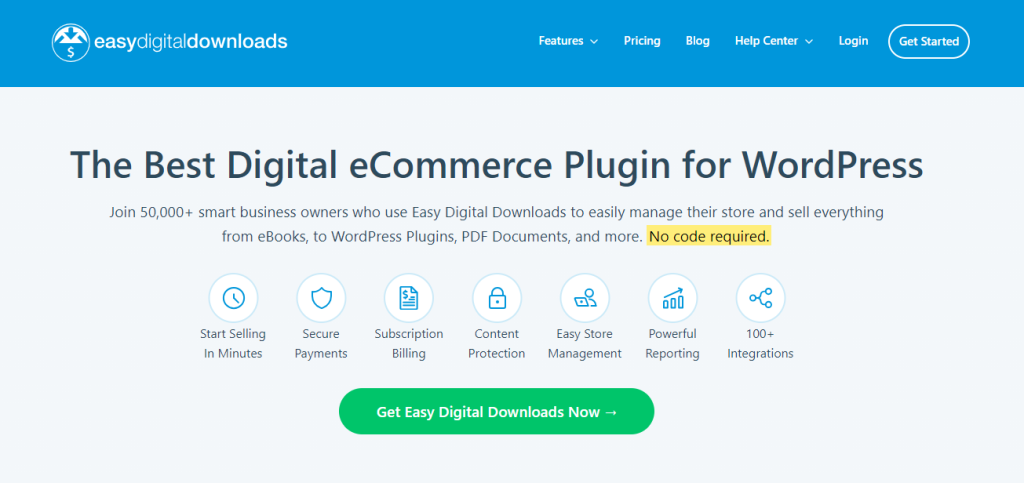
Easy Digital Downloads (EDD) is purpose-built for selling digital files on WordPress. If your catalog is eBooks, PDFs, software licences, or audio files, EDD provides a cleaner interface and a more focused setup path than WooCommerce’s general-purpose approach.
The free core plugin gives you a digital storefront, discount codes, file access control, and customer download history. Premium extensions add Stripe, PayPal Commerce, email marketing integrations, and recurring payments.
From WP STAGING support tickets, EDD stores are generally simpler to stage and push than WooCommerce stores. The database footprint is smaller, with no shipping tables or physical inventory rows, which means fewer table exclusions to configure when pushing from staging to production.
Pros
- Straightforward setup for digital-only catalogs.
- Works with most WordPress themes; EDD-specific themes also available.
- Detailed reporting: earnings, downloads, and customer history.
- Extensions cover major payment gateways and email marketing services.
Cons
- Not suited to stores that plan to add physical products.
- Default styling is minimal; a branded storefront requires customization.
- Extension interactions can be difficult to diagnose without premium support.
Pricing
The core plugin is free. Premium plans run from $99 to $499/year and include full customer support, site licences, and key extensions.
3. MemberPress
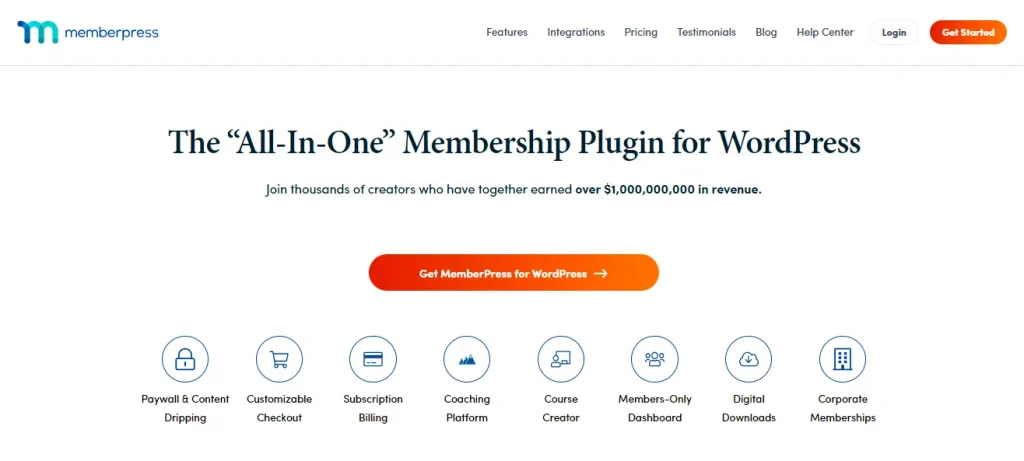
MemberPress turns a WordPress site into a membership platform. It handles subscriptions, content access rules, and course delivery in one plugin. The setup process is direct: create a membership level, set the price and billing cycle, then restrict the relevant content to that level.
MemberPress integrates with Stripe, PayPal, and Authorize.Net, and works with most major email marketing tools. It sends automated renewal and expiration notices, which reduces subscriber churn without requiring manual follow-up.
Pros
- Clean setup for subscriptions and content gating.
- Granular access rules: restrict by post, page, category, or custom post type.
- Automated renewal and expiration email notifications.
- Compatible with most third-party services and plugins.
Cons
- No free tier; the lowest plan starts at $179.50/year.
- Membership page design options are limited without a page builder.
Pricing
Plans start at $179.50/year for a single site and go up to $499.50/year for the Elite package. All plans include customer support and plugin updates.
4. BigCommerce

BigCommerce for WordPress uses a hybrid model: product catalog and checkout run on the BigCommerce platform, while the storefront runs on WordPress. This separation offloads PCI compliance and checkout performance from your WordPress server.
The plugin integrates with Facebook, Instagram, and Amazon for multi-channel selling from a single product catalog. There are no transaction fees on any plan, and HTTPS and PCI compliance are included by default.
Pros
- No transaction fees on any plan.
- Built-in SEO, shipping, and payment features without additional extensions.
- Multi-channel selling via Facebook, Instagram, and Amazon from one dashboard.
- HTTPS and PCI compliance included.
Cons
- The headless architecture adds complexity; not ideal for first-time store owners.
- Higher-tier plans can be expensive for small-volume stores.
- Annual sales limits trigger automatic plan upgrades.
Pricing
Plans start at $29/month with a 15-day free trial. Higher tiers unlock more staff accounts and higher sales limits.
5. WP Simple Pay
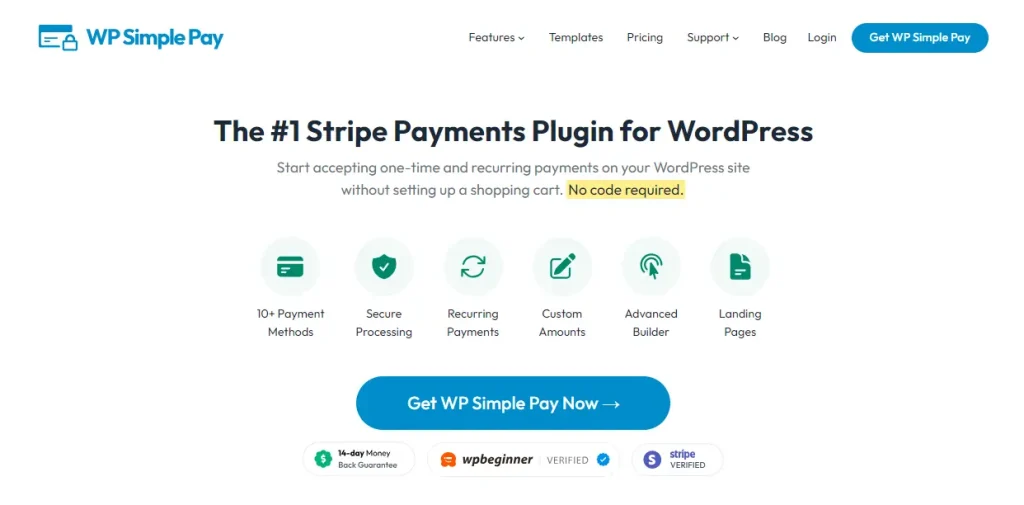
WP Simple Pay adds Stripe-powered payment forms to WordPress without requiring a product catalog or shopping cart. It is well suited to freelancers, consultants, and small businesses that need to collect one-off payments or set up recurring billing quickly.
You can build payment forms with custom fields, choose from pre-built templates, and configure recurring billing cycles. All transactions process on PCI-compliant Stripe servers.
Pros
- Fast setup with no shopping-cart architecture required.
- Pre-built templates for common payment scenarios.
- Supports one-off payments and recurring subscriptions.
- PCI-compliant via Stripe.
Cons
- Not suited to stores with large product catalogs or complex shipping requirements.
- The free WP Simple Pay Lite version adds a 3% fee on top of Stripe’s standard rates.
Pricing
Paid plans start at $34/year for a single site and go up to $209/year. The free Lite version covers basic payment forms, with the 3% surcharge applied.
What About Other Options?
A few alternatives come up in plugin searches but are not in this list:
WP eCommerce is an older plugin with a smaller active development community. For a new store, WooCommerce or Easy Digital Downloads offer more reliable long-term support and a larger extension ecosystem.
Shopify Buy Button embeds a Shopify checkout widget into a WordPress page. It is a reasonable choice if your store already runs on Shopify and you only need a WordPress front-end, but it is not a WordPress-native solution and requires an active Shopify subscription to function.
When a hosted platform makes more sense: If your team has no WordPress maintenance resource, a hosted platform removes the hosting, plugin update, and security-patch burden. WordPress eCommerce is the right choice when you already run WordPress for content and want to add a store without migrating platforms.
Conclusion
WooCommerce is the right default for most stores: it handles physical and digital products, has the broadest extension ecosystem, and the largest community. Easy Digital Downloads is the specialist choice for digital-only catalogs. MemberPress handles subscription billing and content gating that neither WooCommerce nor EDD does as cleanly out of the box. BigCommerce suits stores that need enterprise-grade infrastructure without managing a WooCommerce server setup. WP Simple Pay handles payment collection for sites that do not need a full storefront.
The decision comes down to what you sell, whether you expect to add new product types, and how much WordPress maintenance your team can absorb.
Related Articles
- WP Staging vs BackWPup: Which is the Best Option?
- WP Staging vs All-in-One WP Migration: A Detailed Comparison
- How To Fix the "Sidebar Not Appearing" WordPress Error
- How to Fix 429 Too Many Requests Error in WordPress?
- How to Troubleshoot the 502 Bad Gateway Error in WordPress
